Civil
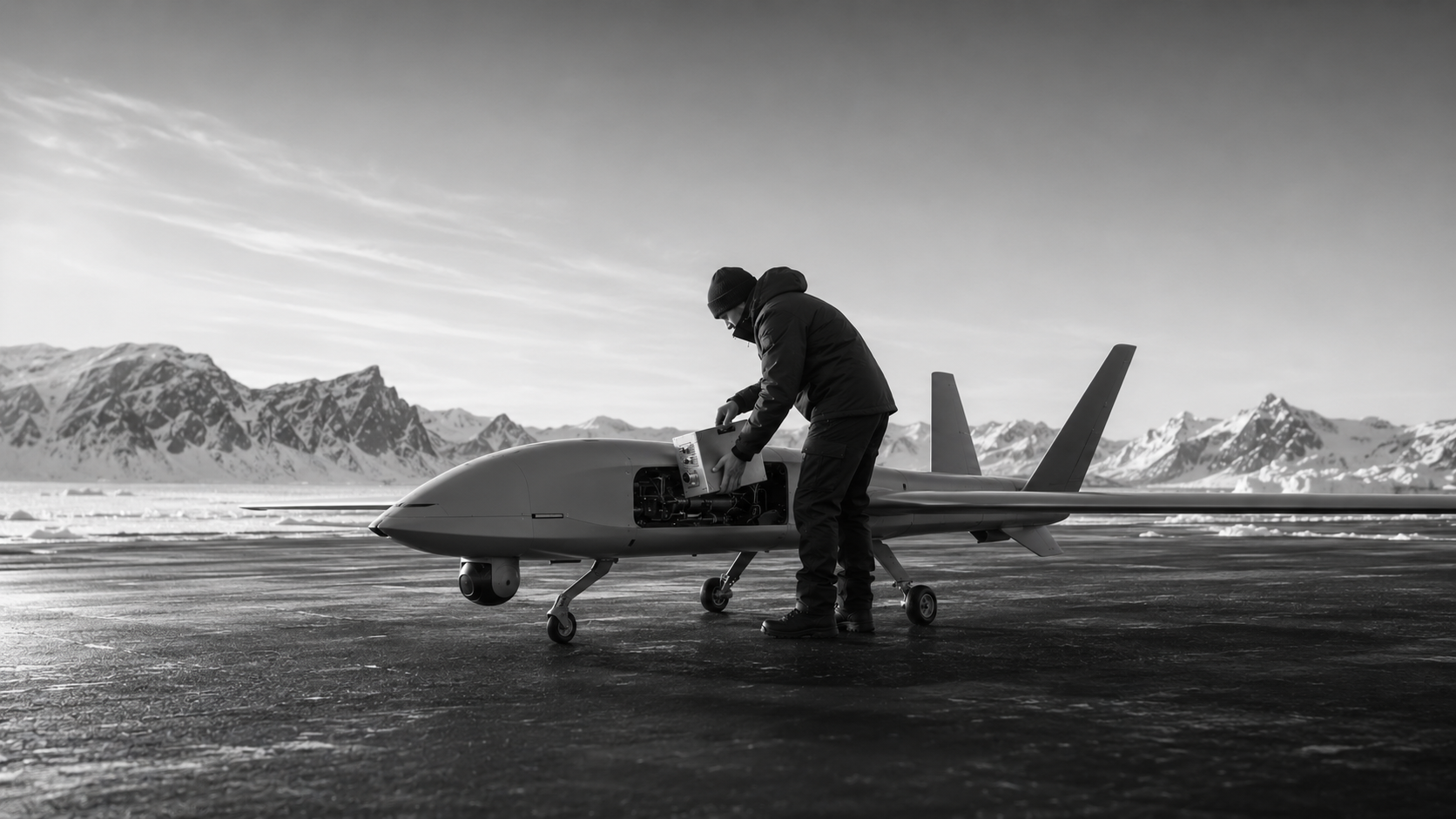
Arctic science & monitoring
Quiet, cold-tolerant coverage of the far north.
Invented in Denmark. Owned in Europe.

The Technical University of Denmark’s department for energy conversion and storage. Research in ceramics for fuel cells, electrolysis cells and batteries.

Vienna-based maker of ceramic 3D printers and materials, serving semiconductor, aerospace, medical and dental markets.

Develops and manufactures catalysts and electrochemical materials, including materials for solid oxide fuel cells and electrolysis.
Civil
Quiet, cold-tolerant coverage of the far north.
Defence
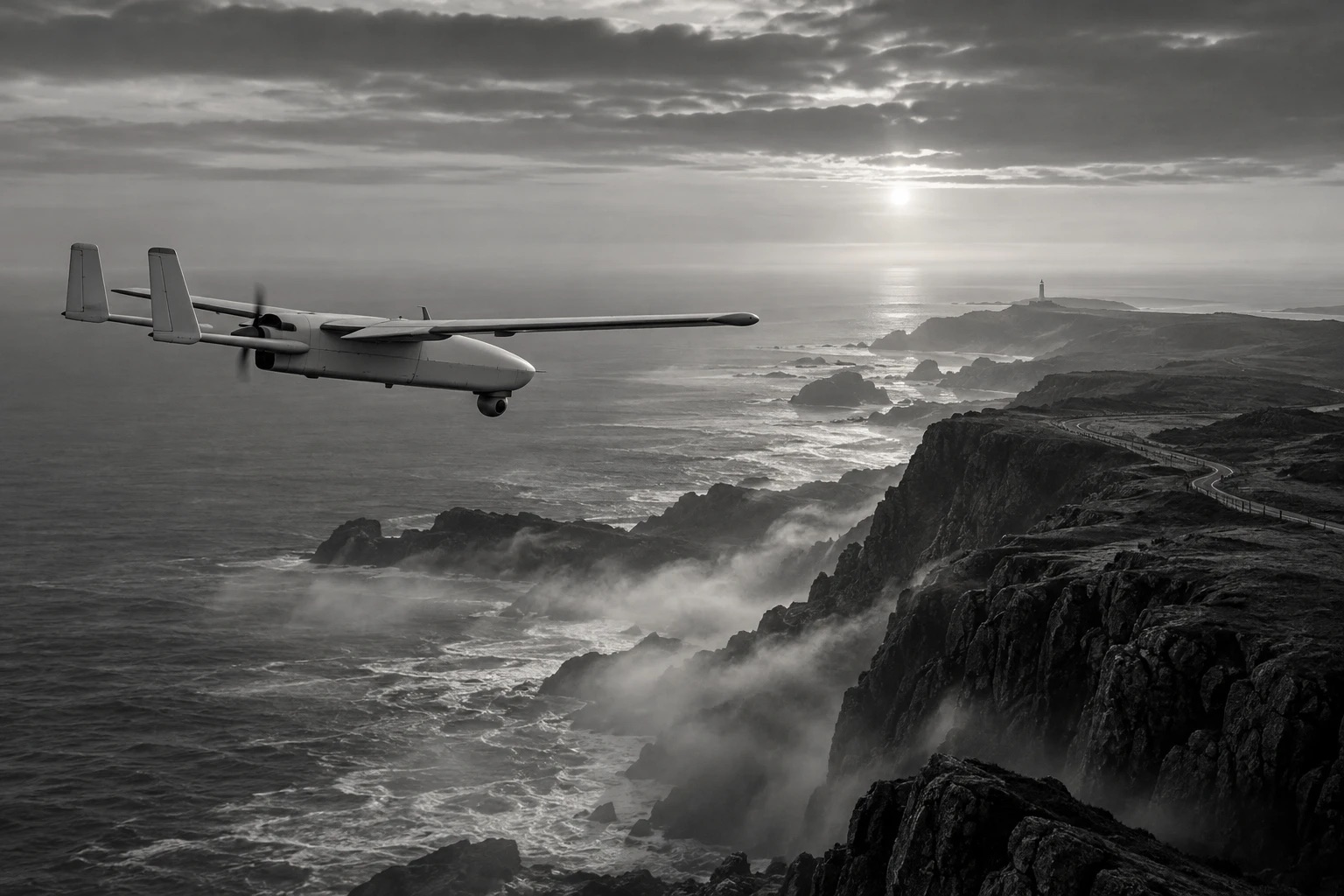
Persistent, covert watch on 15–35 kg aircraft.
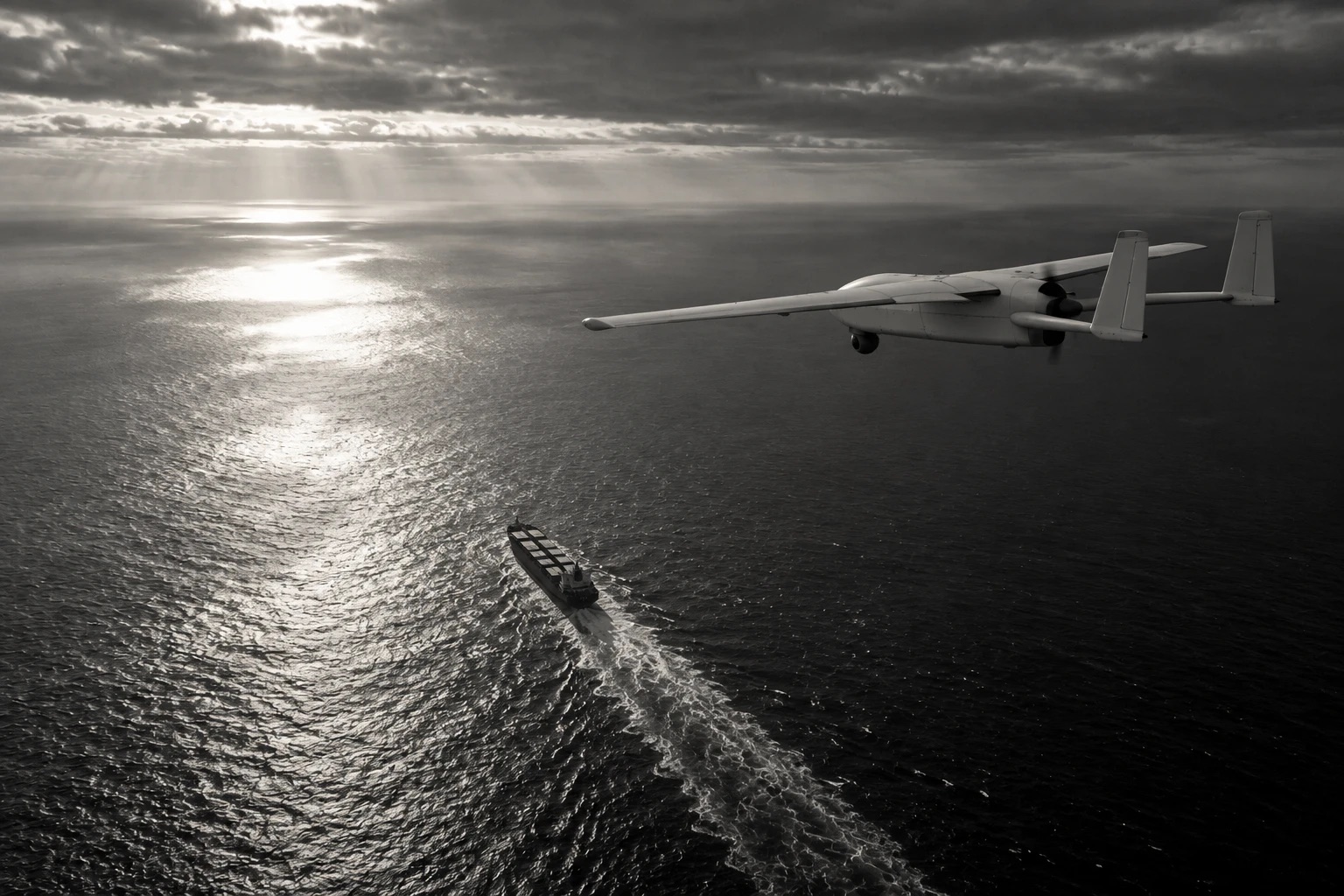
Civil
Long-endurance patrol, flown as a service.
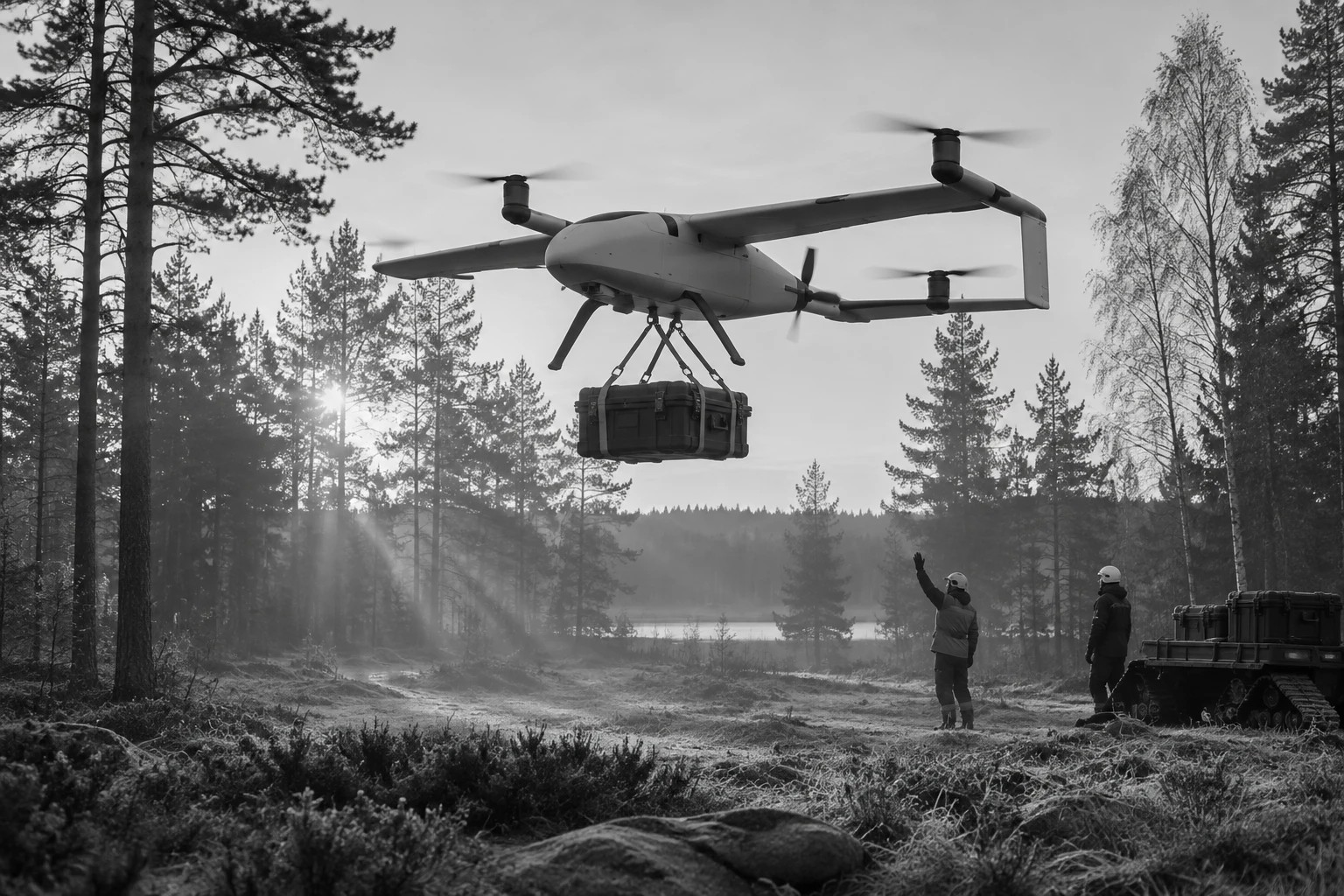
Civil
Heavier loads, same time in the air.
Endurance that depends on imported cells or an imported fuel chain is endurance someone else controls. NEOVIUX is invented, protected and printed in Europe.
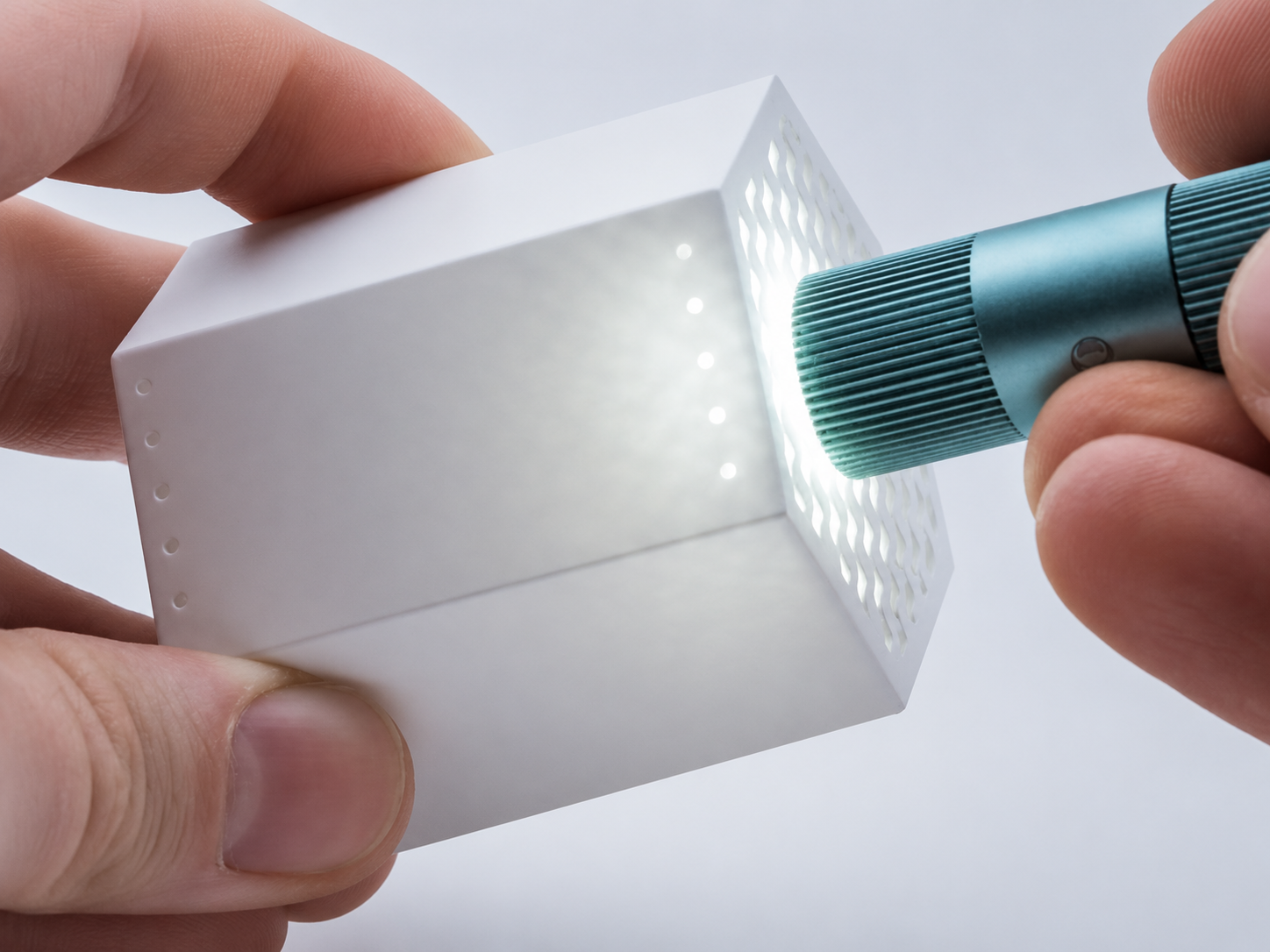
For decades, solid oxide fuel cells have been built flat. NEOVIUX prints the whole cell as one continuous ceramic gyroid lattice.
Light & compact
Large active surface
Fuel flexibility
Modular
Regeneration
Cold-tolerant
First prototype target.
Long-run aim: scale up to 1.5 kW.
The cell physics is public and measured, and the cell stands at TRL 3–4. What it takes to turn it into a flight-ready module is not.
 Vol 10 · August 2025
Zhou et al., Technical University of Denmark.
Engines are loud, hydrogen needs a supply chain and flat cells are heavy. Here is how the module is positioned against the power systems platform teams already know. Select a column to compare.
| What buyers ask for | ||||
|---|---|---|---|---|
| Flight time | 14–22 h (modelled)1 | 20+ h5 | >10 h5 | 8+ h5 |
| Cold, down to −45 °C | Target (to be tested) | Works6 | Open-cathode dries out6 | No flight data6 |
| Efficiency | ≥ 50–60% | ~20–30% | ~40–60% | ~40–60% |
| Start-up time | < 20 min | Seconds | Minutes | ≥ 30 min |
| Fuel flexibility | High | Petrol or heavy fuel | H₂ only | High |
| Emissions | Low, fuel-dependent | High CO₂, NOₓ | Very low | Low, fuel-dependent |
| Power packing density | Very high | Medium | Low | High |
A DTU Energy spin-out, built where the cell was invented.

Advisor · Co-inventor of the gyroid cell
Ceramics and stack design

Advisor · Co-inventor of the gyroid cell
Balance of plant and system integration
“What we heard from customers: reliable operation in extreme cold and year-round availability beat almost everything. Fuel flexibility rounds it off, with a lower overall cost of operation and predictable mission planning.”
Ahsanul & Adriano, NEOVIUX
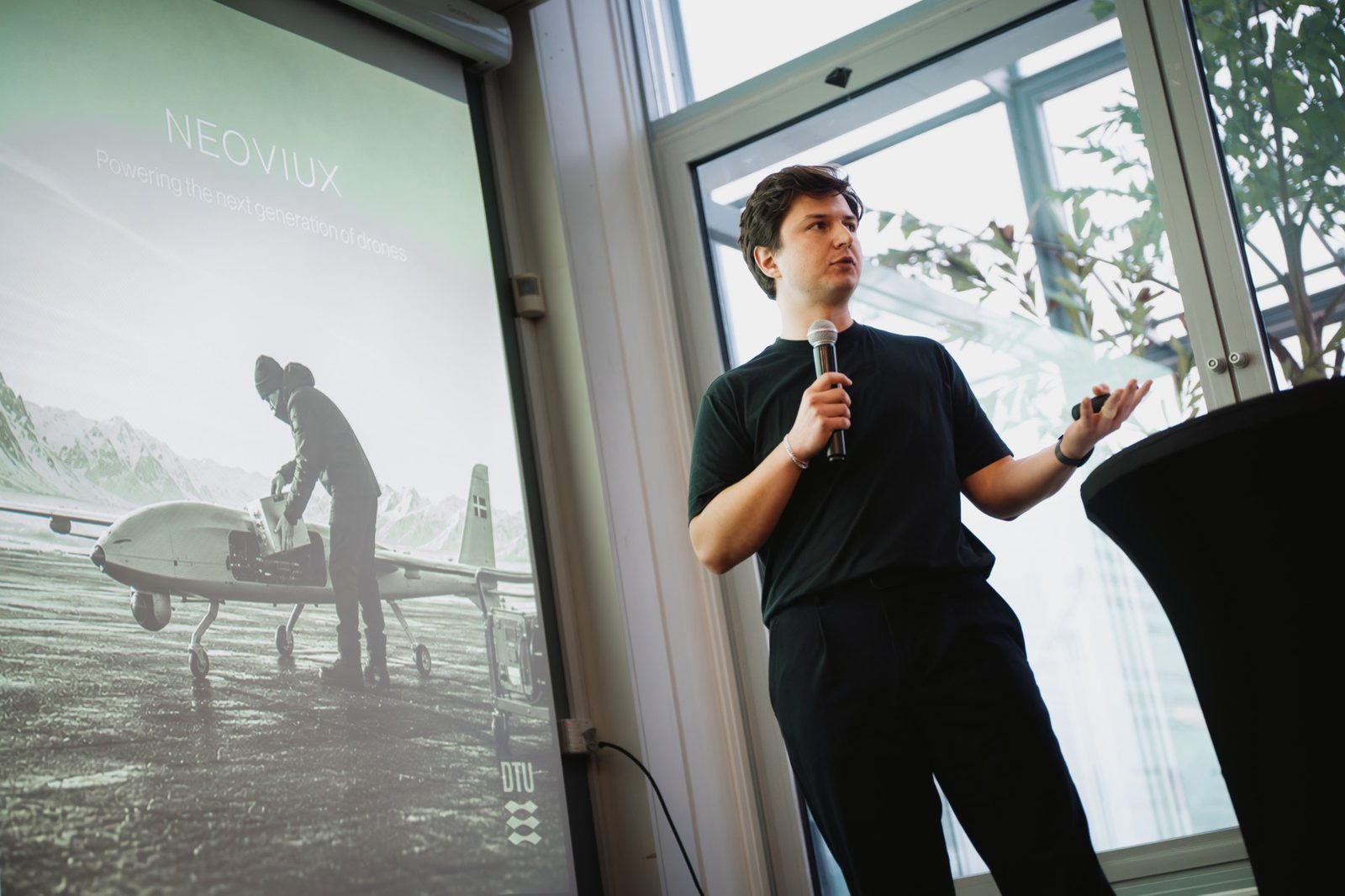
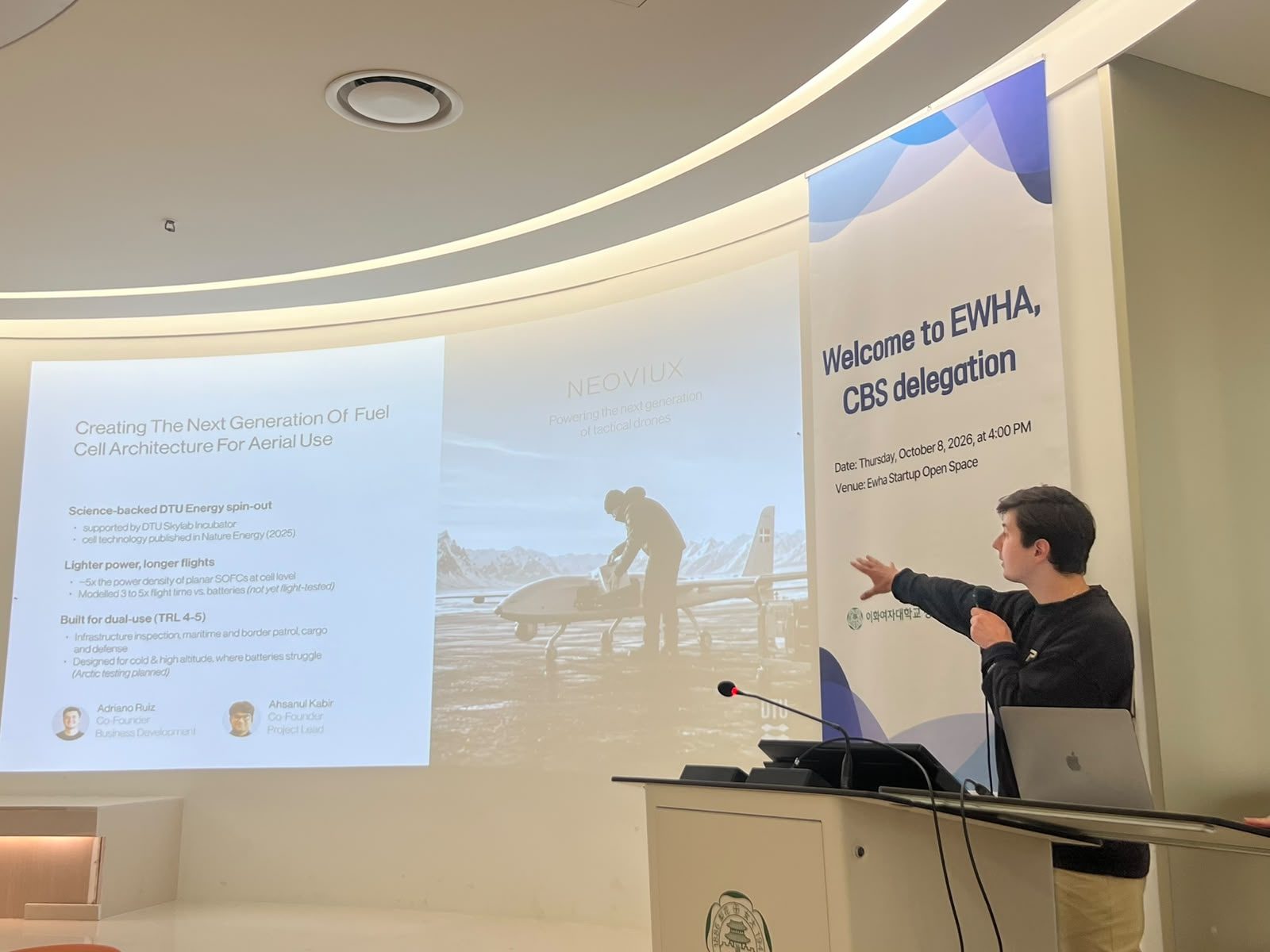
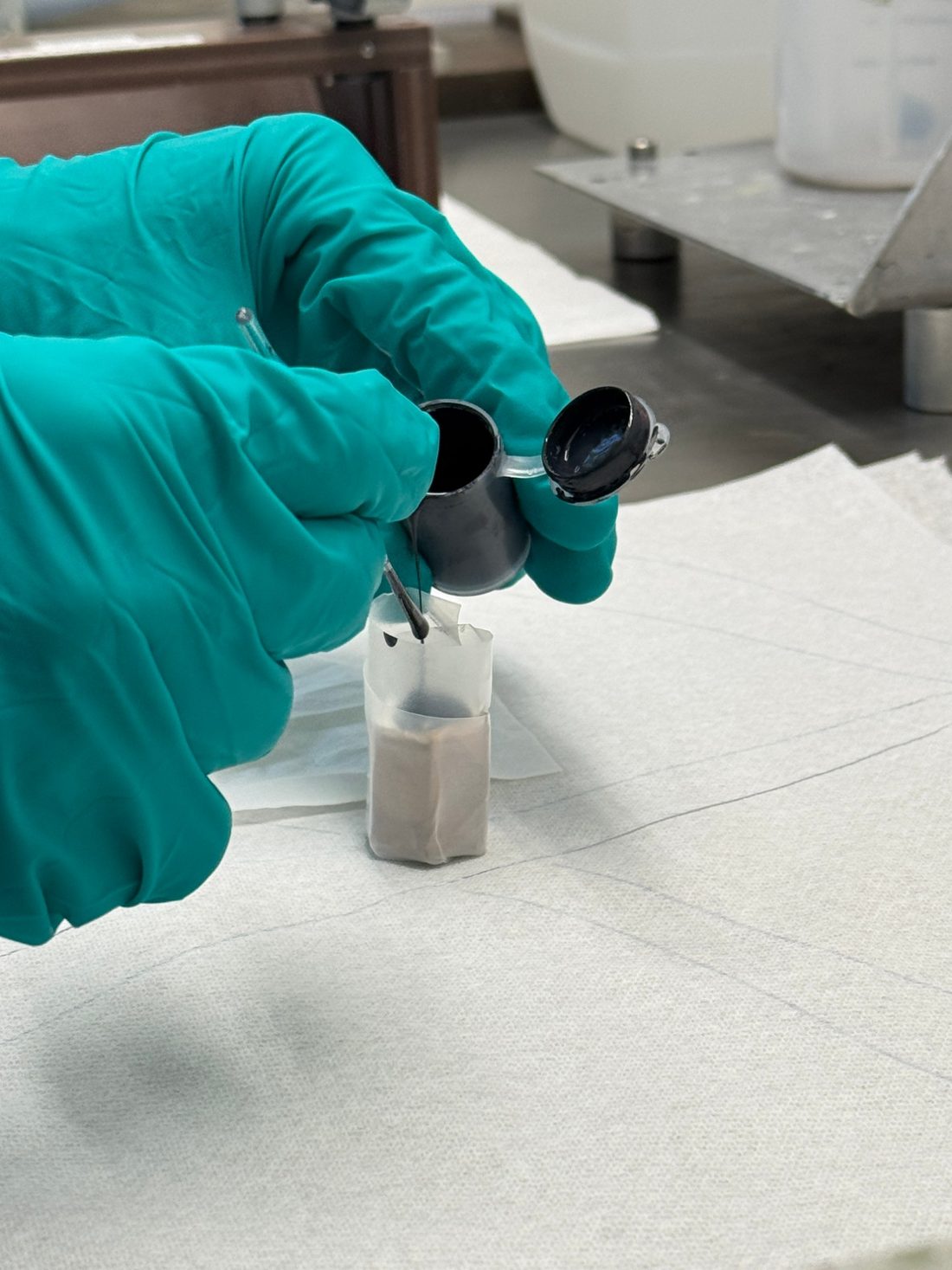
A few frames from the team’s work, as it happened.
We brief a small number of aircraft makers, mission operators and research teams. The technical brief follows the first conversation.
Aircraft makers, operators and research teams can request the technical sheet. We review each request.
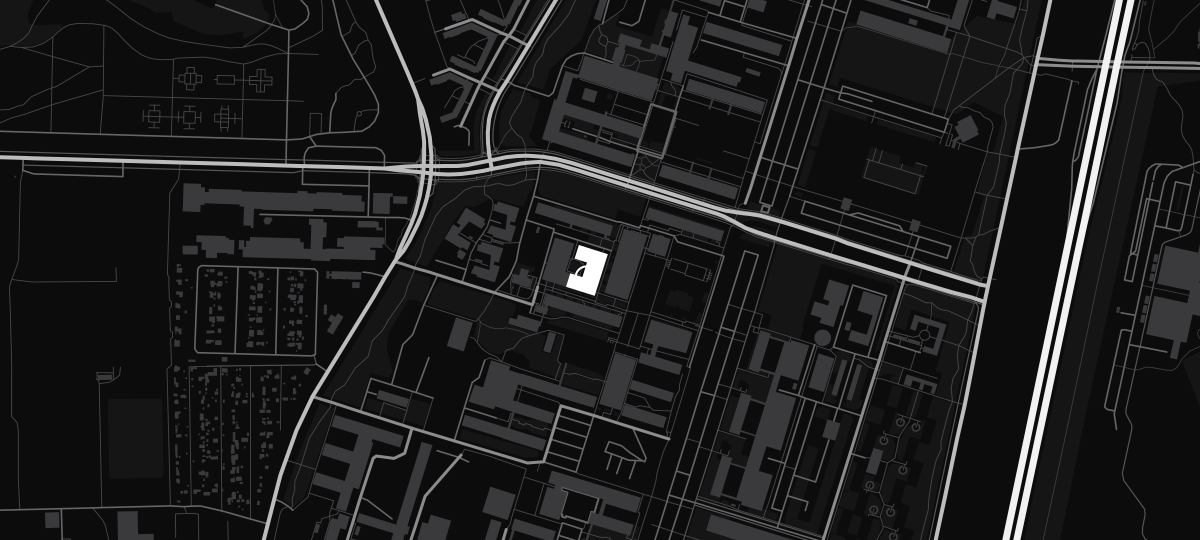
DTU Building 310
Fysikvej, 2800 Kongens Lyngby, Denmark